Colorado live music economy hits $500m with new venues
This article appears in the Fall 2025 issue of ColoradoBiz under the headline: Colorado’s $500M live music economy fuels next wave of fan-first venues.
Live music brings in $500 million a year in Colorado. If you ask J.W. Roth, there’s still room to grow.
The founder and CEO of Colorado Springs-based VENU Holding Corporation (NYSE American: VENU), Roth is a fifth-generation Coloradan and serial entrepreneur who caromed from biotechnology to prepared foods to real estate development to venture capital before he parlayed his passion for music into VENU in 2017.
Roth says he’s building a new model in the concert business that takes a page from professional sports. “I started VENU because I saw a gap in the live entertainment industry,” he says. “While industries like Major League Baseball and the NFL had spent years refining every detail of the fan experience, maximizing dwell time, enhancing amenities and creating unforgettable moments, the music industry hadn’t caught up. The level of intentionality just wasn’t there.”
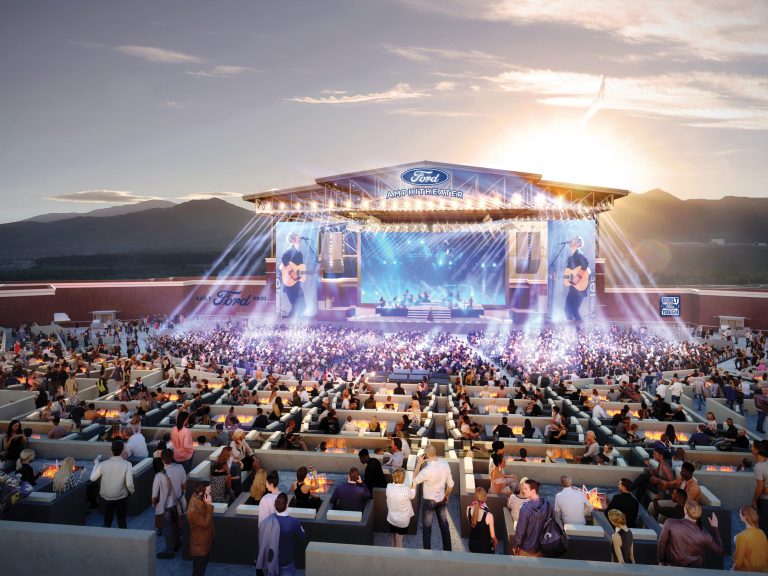
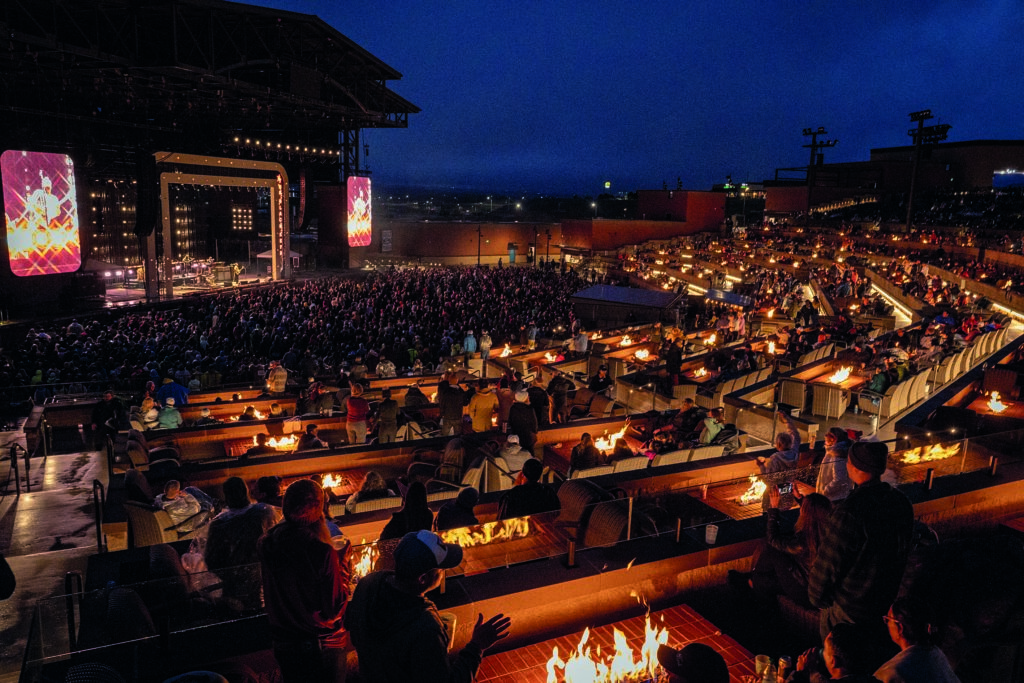
The $130 million, 8,000-seat Ford Amphitheater on the north side of Colorado Springs has been the standard bearer for this vision since it opened in August 2024. Roth says his experience as a rock fan (he’s an avid vinyl and guitar collector whose first date with his wife was a Lynyrd Skynyrd concert) informed the venue’s design. At Ford Amphitheater, that means wider seats and aisles, lower ticket prices and 130 Luxe FireSuites, luxury suites with fire pits and dedicated restrooms. VENU has already sold 90 of them for $250,000 apiece.
The idea was sparked by “the largest fire pit in the history of backyard fire pits” at Roth’s house. “It always struck me how natural, relaxed and connected everyone felt,” he says. “That’s when it hit me: This is what’s missing at concerts. That sense of warmth and togetherness. So, we brought it to life. The FireSuite is a luxury suite with a fire pit in the center, under the stars, an intimate, elevated space where fans can connect, relax and still be right in the heart of the show.”
Terri Liebler, VENU’s president of growth and strategy, says Ford Amphitheater exceeded expectations by welcoming more than 100,000 guests in its truncated 2024 season. It also earned a nomination for “Best New Concert Venue of the Year” by Pollstar magazine but lost the award to the $2 billion Intuit Dome in Los Angeles.
Beyond building Ford-like amphitheaters in several cities in Oklahoma and Texas, VENU is developing a mid-sized indoor music hall in Centennial, Colorado, that will feature the first indoor version of the FireSuites and have a capacity of 1,600 to 2,000 people. “We want to be respectful of the market, and what the market can bear,” says Liebler
An experience-based economy
Colorado occupies a unique perch in the broader live music landscape. “With major tourism drivers like skiing, hiking and national parks, music venues here often benefit from ‘experience stacking,’ where concert attendance is part of a broader leisure itinerary,” says Liebler. “Ford Amphitheater’s short inaugural 2024 season saw 5,500 different zip codes ranging from all 50 states.”
Michael Seman, a professor at Colorado State University who has built a career researching the surprisingly strong economic impact of live music, recites a maxim he heard about Colorado: “Live music is part of our fabric, but it’s not our identity.”
“It’s not everything,” he says. “It can be a feature, and it just keeps growing, because there are opportunities for that, Red Rocks being the prime example. People travel all over the world just to go to Red Rocks. You’re also increasingly seeing it at mountain resorts, which are perfect for hosting live events and festivals, because they have the infrastructure.”
There are still a few voids in the state’s venue map, Seman notes, but Ford Amphitheater filled a big one in Colorado Springs. He also sees space in Fort Collins and Northern Colorado, another area in Colorado that Liebler says VENU is eyeing.
In the longer term, the industry’s opportunities and challenges are tied to the younger generations that are prime consumers of live music: Millennials, Generation Z and Generation Alpha. “They truly want to spend money on events and experiences more so than items, so that plays into it as well,” says Seman.
However, another broad trend threatens to upend a staple of live music’s business model, he adds. “We’re seeing Generation Z drinking a lot less. That’s a great thing, but in terms of venues, it’s already hitting them hard, and it’s just going to get worse, because right now, Millennials and Generation Z are about 51 percent of the population.”
With this in mind, Seman says he sees benefits to a model where venues are owned by municipalities and nonprofits. “My hypothesis is these venues are more than just economic development, it’s social and cultural development,” he explains. “Communities are using venues for interacting with schools, helping develop education programs. A lot of the people who work for them are very entrepreneurial. They go on to start their own things, like live sound for touring bands. Oftentimes, it’s a place where people meet.”
The missing piece
Levitt Pavilion Denver strikes a balance between bar sales and community support. The Denver offshoot of a national nonprofit, the 6,500-capacity outdoor venue opened in Denver’s Ruby Hill Park in 2017. The construction budget was about $5 million.
“Levitt really exists in this space between the larger music venues that are typically for-profit enterprises and a nonprofit, mission-driven model,” says Meghan McNamara, the venue’s executive director. “Most music venues of our size, with our production capacity, are for-profit organizations, and I think what we offer the community is something that is often missing from a lot of music markets.”
The missing piece was “an accessible, all-ages venue where the programming looked a little bit different,” says McNamara. “Ninety percent of what we do each season is free to the public, but concessions and rental and a couple of our own ticketed shows really help create a robust earned revenue stream that a lot of arts organizations are struggling with.”
Levitt’s earned revenue represented 65 percent of its 2024 income, and contributions totaled 35 percent. For 2025, that’s closer to 50-50. “Typically, those numbers are flipped where you have a lot of arts organizations who are closer to 60 to 70 percent contributed, and earned revenue is a puzzle that they’re trying to figure out,” notes McNamara. “Our model allows us to make programming decisions that aren’t purely profit-driven. They’re about audience development, they’re about community engagement, and fundraising is where we can make up that gap.”
Levitt’s model also allows the venue to book shows without a laser focus on the bottom line. “The market right now is really tough,” says McNamara. “Touring is expensive. Insurance costs for outdoor venues in particular have gone up in really significant ways. And for us, we also want to be able to program in a way that isn’t just about a single show making a profit. There are things that we have on our season very intentionally that are loss leaders because they represent a culture that’s not been particularly visible on stage, or because they bring out a community that has not been included previously.”
Collaborations with the University of Denver and the School of Rock have helped Levitt engage younger patrons, she adds. “I think one of the most important things that any arts organization, any music venue, can do to continue to nurture that next generation of audiences is include them in your programming.”
A smaller pie
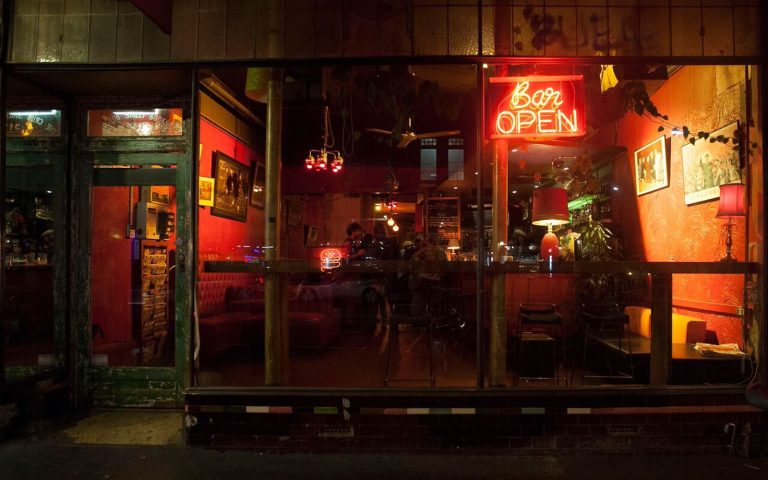
Beyond Ford Amphitheater, there’s no shortage of new small and mid-sized venues in Colorado. Denver’s Federal Theatre had been gathering cobwebs since the early 1980s, but Scott Happel and his partners were pleased to see the interior was in “shockingly good” shape and pursued a roughly $250,000 renovation, he says.
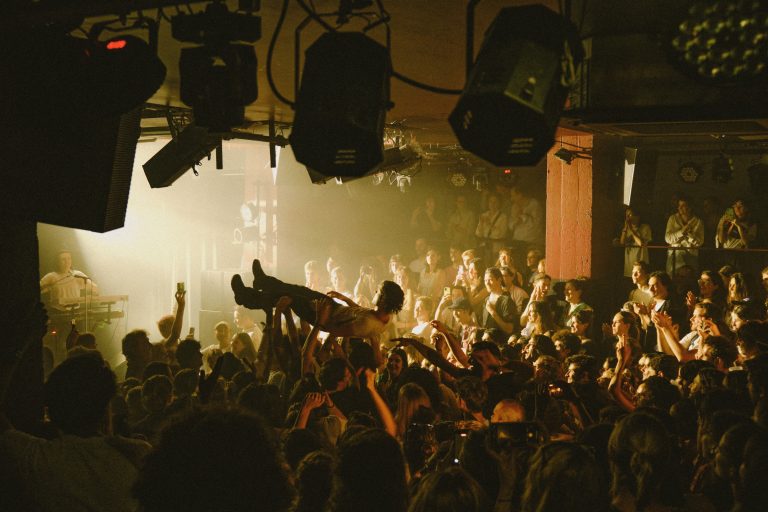
The 600-capacity venue is slated to open for live music in fall 2025. Happel says its size makes it a good counterpart to the 800-capacity Oriental Theater, another venue he and his partners operate.
Happel says his goal is for ticket sales to cover the artist’s pay and staff at the show, and alcohol pays for everything else, from rent to electricity. “It is a rare show where ticket sales end up in any percentage of a profit for a venue,” he notes. “Artists, more often than people think, get more than 100 percent of the door. It’s always going to be bar sales that are the profit center.”
“If alcohol sales were to systematically drop by 25 percent, then venues would just go out of business. But of course, every music venue in the world is not going to go out of business. Things will change.”
That’s the venue perspective. For musicians, the profit center has changed markedly, Happel adds. “When album sales were what most artists made their money on, and touring was essentially a marketing expense, you would find that the artists were getting somewhere around 70 to 75 percent of the door. As album sales dried up and artists couldn’t make any money that way, everything flipped. Now the only way for artists to make money was touring, they pushed to get a higher percentage of that money, and it’s settled around 85 percent.”
Happel says the shows at his venues tend to cater to an older demographic, and the broader trend of decreased drinking has yet to make an impact on shows’ takes. “At some point, if a venue’s only source of profit is alcohol and that source of profit dwindles, then artists make less money,” he says. “Nobody wants to take less money, but if there’s less money in the pie, even if you keep your same piece of the pie, it’s less money.”
Happel says he’d be in favor of policies allowing venues to sell cannabis edibles as a new revenue stream. “If a live music venue could sell edibles, would that make up the difference in the drop in bar sales? Potentially.”
Based on their economic impact, local or state governments might want to offer grants to music venues as an economic development strategy, he adds. “Could a small, local, independently owned business like us be something that the city and state gives money to, versus a multibillion-dollar corporation?” Happel muses. “Given my position, I certainly have opinions on that.”
Online:
w